

Qantas Hackers Leak Data of 5 Million Customers After Failed Extortion Attempt
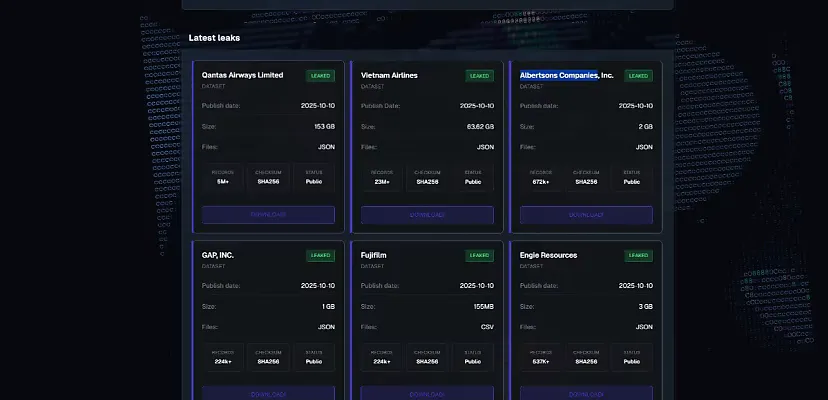
A recent cyberattack on Qantas has resulted in the leak of personal data belonging to up to 5 million customers. The attackers, known as Scattered Lapsus$ Hunters, claimed to have released the stolen files on the dark web after a failed extortion attempt.
How the Attack Occurred
The hackers exploited Salesloft-Salesforce integrations to access and steal customer data from Qantas and 43 other companies, including Disney, Toyota, McDonald's, and Vietnam Airlines. The attackers compromised Salesloft accounts that were integrated with Salesforce and exploited the linked API tokens and OAuth connections to pivot into Salesforce environments and exfiltrate customer data.
What Data Was Stolen?
The leaked data includes personal records of 5 million Qantas customers, such as:
- Names
- Email addresses
- Phone numbers
- Birth dates
- Frequent flyer numbers
Fortunately, credit card details, financial information, and passport details were not stolen.
The Extortion Attempt
Scattered Lapsus$ Hunters tried to extort Qantas for money, offering to delete the stolen files in exchange. However, the airline refused to engage with the attackers, stating that they "will not engage, negotiate with, or pay any extortion demand".
In response, the group posted on its data leak site, "Don't be the next headline, should have paid the ransom".
Consequences of the Leak
The leak puts millions of people at risk of cyberattacks or scams, as numerous cybercriminals now have easy access to contact and flight information. This data can be used for:
- Phishing
- Identity theft
- Fraud
- Other malicious activities
The Hackers' Motivations
Scattered Lapsus$ Hunters is a group comprising members of Scattered Spider, Lapsus$, and ShinyHunters. They had previously announced "going dark" due to fear of publicity, but it appears they have resumed their activities.
The group has targeted 44 companies, including major brands like Gap, Toyota, Disney, and McDonald's. Their motivations and goals are still unclear, but their actions demonstrate the growing threat of cyberattacks on businesses and individuals.
Protecting Yourself
If you are one of the affected Qantas customers, it's essential to be cautious and take steps to protect yourself:
- Monitor your accounts for suspicious activity
- Be wary of phishing attempts
- Use strong passwords and two-factor authentication
- Keep your software and operating system up to date
By taking these precautions, you can reduce the risk of falling victim to cybercrimes.


Comments
0 commentsLeave a Comment