

How Law Enforcement Uses Tools Like Cerberus to Catch Darknet Sellers
What Tools Do Law Enforcement Have to Catch You?
The darknet was built on anonymity, but it leaves traces. While vendors operating on Tor believe they're invisible, law enforcement agencies have access to sophisticated tools to follow those traces and connect anonymous aliases to real identities. Cerberus and similar dark web investigation platforms are used by federal agencies to systematically uncover the operational security (OPSEC) failures that vendors unknowingly commit.
How These Tools Work
Dark web intelligence platforms automate what used to require hundreds of hours of manual investigation. Built in collaboration with national law enforcement agencies, tools like Cerberus scrape and catalog content from darknet markets and forums (including vendor profiles, PGP keys, product listings, images, and forum posts) and then establish connections between disparate pieces of data to build comprehensive profiles of criminal actors.
These platforms maintain extensive historical dark web data spanning over a decade from marketplaces, forums, and leak sites, with live updates of new activity. This archive is crucial because it preserves evidence even after vendors delete their accounts or markets shut down.
Core Capabilities
Data centralization is the primary advantage of these investigation tools. Instead of investigators manually visiting different markets and forums to piece together a suspect's activity, all information is consolidated in searchable databases. An investigator can begin with a single username, email address, PGP key, or cryptocurrency wallet and instantly see:
- All marketplace accounts using that identifier
- Forum posts and conversations across platforms
- Timeline of activity
- Associated contact information (Telegram handles, external messaging tool usernames, email addresses)
- PGP key metadata and registered email addresses
Cross-web identity extraction is where these tools become invaluable for prosecutors. The platforms automatically extract contact information and usernames from market listings and forum posts, then help investigators link these darknet identities to clearweb profiles on social media, email accounts, and public databases. When a real identity emerges, law enforcement can pursue warrants for those accounts and build a prosecutable case.
A Real-World Example: USA v. Adams et al

The power of these investigation tools becomes clear in actual cases. In May 2022, Holly Adams and Devlin Hosner were indicted by a Sacramento jury for conspiracy to distribute fentanyl and methamphetamine, a case that demonstrates exactly how law enforcement catches darknet sellers.
The Investigation
Adams and Hosner operated under two aliases: "Igogrraawwr" and "its4real." Over their operations, they sold tens of thousands of counterfeit oxycodone pills laced with fentanyl across multiple darknet markets, receiving over $800,000 in cryptocurrency payments while shipping pills throughout the United States.
Following the Digital Trail
When investigators began with the username "Igogrraawwr," law enforcement databases and analysis tools revealed:
- 262 market listings across four different platforms (ToRReZ, WorldMarket, Dark0de, and Tor2Door)
- 60 conversations mentioning the username
- Two distinct accounts (with marketplace presence and forum presence on Dread)
- Explicit references to fentanyl, with listings describing "pressed with fent" and "new batch has lots of fent in them"
Focusing on the ToRReZ marketplace (which contained 189 listings), investigators accessed detailed account information showing activity from February 12, 2021 to August 7, 2021. But the real breakthrough came from the OSINT and PGP key data that these investigation tools extracted from the posts and account profile.
Breaking the Anonymity
The investigation revealed a Telegram handle (@grraawwr760) and a PGP public key associated with the account. When investigators examined the PGP key metadata, they found the registered email address: [email protected] (a crucial link between the darknet alias and the clearweb).
Further investigation showed that the username variations "grraawwr76," "grraawwr760," and references to a Wickr account (grraawwr760) were used consistently across multiple platforms. This repetition of usernames (a critical OPSEC failure) gave investigators multiple angles of attack.
When the username "grraawwr76" was searched on clearweb sites, investigators found images of the individual who owned the profile, enabling them to positively identify Holly Adams.
The Second Account
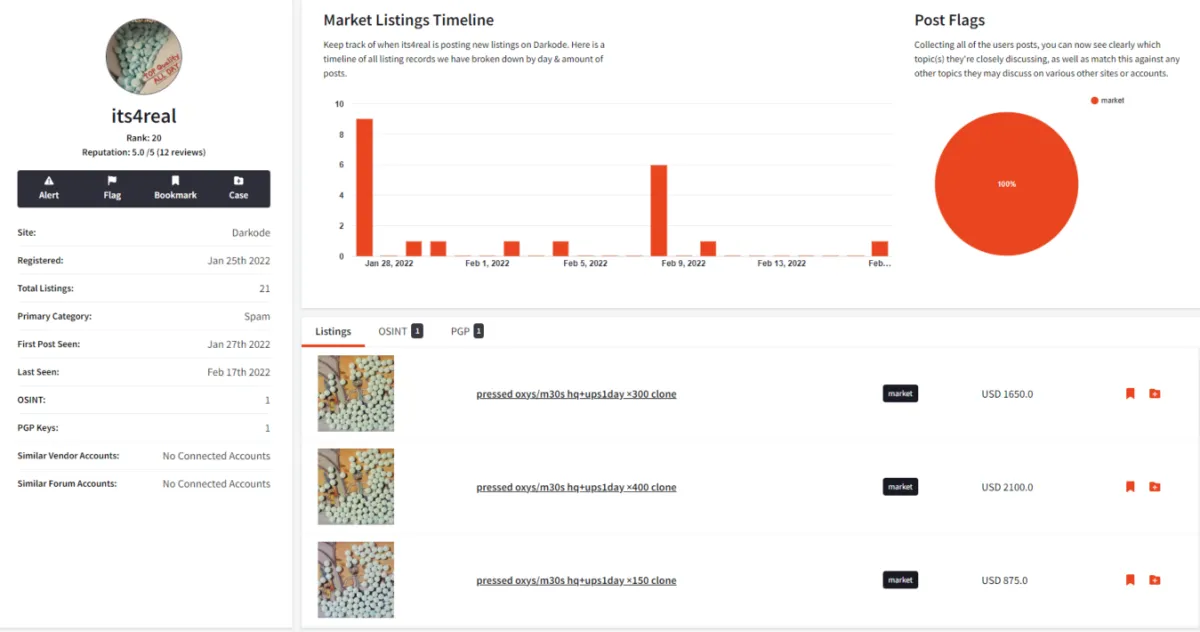
Searching for the second alias, "its4real," law enforcement tools showed:
- 30 market listings on Dark0de
- 4 conversations mentioning the account
- Account creation on January 25, 2022 and last activity on February 17, 2022
This shorter operational window was likely due to Dark0de's exit scam in February 2022, when the marketplace abruptly closed and stole user funds. The PGP key for this account contained minimal information (just the username and user ID), suggesting Adams was attempting to improve her operational security after the first account's exposure. However, by this point, law enforcement had already collected sufficient evidence from the first profile to prosecute.
How Metadata Exposes Darknet Vendors
While the Adams case relied on username correlation and PGP key analysis, another critical vulnerability emerges from a seemingly minor oversight: embedded metadata in photographs. The case of Mark T. Eager demonstrates how a single image posted for marketing purposes can reveal an entire operation's location.
The Mark Eager Case: Busted by EXIF Data
Mark T. Eager ran a drug distribution network from a basement room in Kearny, New Jersey, operating under the vendor name "WRSEH10" on the Dread forum. He advertised free samples of fentanyl, offering to build his customer base with zero-cost initial shipments. Over four months, he distributed just over one pound of fentanyl, generating approximately $42,000 in cryptocurrency sales.
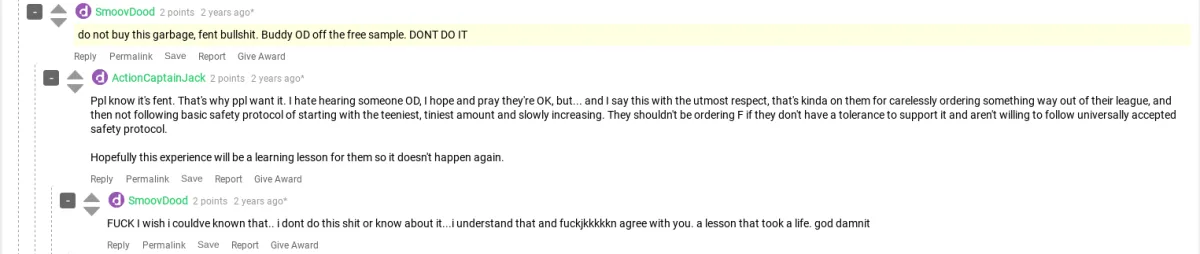
In November 2023, a Michigan resident who had received one of Eager's free samples died from an overdose. The death involved fentanyl, methamphetamine, and fluorofentanyl, and someone on the Dread forum posted a warning. Federal agents from Homeland Security Investigations in Oregon, already tracking darknet fentanyl trafficking, began investigating.
The Critical Mistake
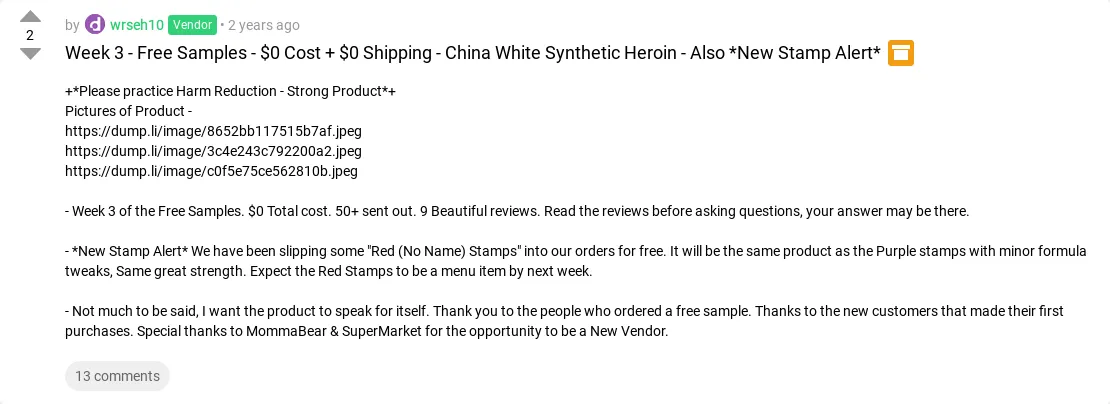
During the investigation, Eager posted photographs on his Dread forum thread to advertise his product samples. He failed to strip the EXIF metadata from these images before uploading them. When forensic analysis extracted the embedded data, the results were devastating:
| Data Point | Value |
|---|---|
| GPS Latitude | 40 degrees 46' 25.10" N |
| GPS Longitude | 74 degrees 8' 30.89" W |
| Camera Model | iPhone XR |
| Software Version | 16.6.1 |
| Timestamp | 2023:10:20 00:27:04 |
| Altitude | 38.8 m Above Sea Level |
These coordinates pointed directly to Kearny, New Jersey, the exact location where Eager was operating. The seemingly anonymous darknet vendor had inadvertently left a digital trail through his own marketing materials. While federal authorities have not publicly confirmed that EXIF data was their primary investigative method, this finding suggests it may have been a critical tool in pinpointing his address.
The Arrest and Sentencing
Federal agents obtained a search warrant in June 2024 and arrested Eager in the basement room where he operated his drug business. They seized 361 grams of powdered fentanyl, counterfeit M30 pills, computers, and packaging materials. U.S. District Judge Michael H. Simon sentenced Eager to 11 years and 3 months in federal prison.
Why This Matters
The Eager case reveals a critical vulnerability that extends beyond darknet markets: vendors often upload product photos to image sharing sites or forums. Even if a marketplace strips metadata from uploads, vendors frequently post images on external sites like Dump.li, Dread, or other forums where the marketplace has no control. Dump.li, for example, offers an option to remove image metadata during upload. But Eager simply didn't check the box, and one unchecked setting exposed his entire operation.
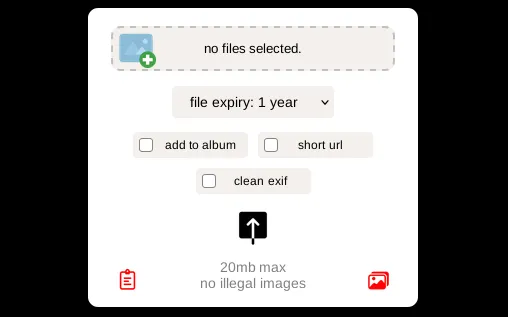
The lesson is unambiguous: never rely on a marketplace or image hosting platform to protect your location data. You must personally ensure that every photograph you upload anywhere (whether to a darknet market, forum, or image sharing site) has been stripped of all EXIF data before it leaves your device. Tools like ExifTool and ImageMagick can remove this data in seconds, but the responsibility lies entirely with you.
A single photograph with GPS coordinates is enough to end an operation. Eager's mistake was believing that posting on an anonymous forum meant his photos were safe. They weren't.
Why This Matters for Darknet Sellers
The Adams case illustrates how username correlation and account metadata expose vendors across platforms. The Eager case demonstrates how image metadata reveals physical location. Together, they show that anonymity on the darknet is an illusion created by dozens of small failures that accumulate.
Even when using Tor and multiple aliases, vendors typically make small mistakes:
- Reusing usernames across platforms
- Including contact information in listings or profiles
- Registering PGP keys with real email addresses
- Using consistent identifiers like Telegram handles or external messaging tool usernames
- Uploading images without stripping EXIF data
Each of these is an OPSEC failure. Modern law enforcement tools systematize the discovery of these cracks, turning what used to require detective work into automated correlation.
What Makes These Tools Effective for Law Enforcement
| Advantage | Impact |
|---|---|
| Automated data correlation | Links usernames, emails, PGP keys, and contact handles without manual cross-referencing |
| Historical archives spanning years | Evidence is preserved even when vendors delete their accounts or markets shut down |
| Safe investigation | Investigators access compiled data without engaging with active markets |
| Multi-agency collaboration | Built-in case file systems and deconfliction features allow task forces to share information securely |
| Court-admissible evidence | Consistent data collection protocols ensure digital evidence withstands legal scrutiny |
| Resource efficiency | Officers of all technical levels can use the platforms; automated analysis reduces manual work |
How Markets Can Resist Profiling
Market operators have several technical and policy levers that could make systematic profiling significantly harder for these tools, though doing so would require trade-offs with vendor reputation and user experience.
Strip Metadata from All Images
Most competent markets already remove metadata from uploaded images, but this is not a reason to rely on the marketplace to protect you. Vendors frequently post images to external sites, forums, or other platforms where the marketplace has no control. The responsibility for metadata removal must rest with the individual vendor.
Use dedicated tools before uploading any image anywhere:
- ExifTool (command line, works on all platforms)
- ImageMagick (powerful batch processing)
This takes seconds and provides absolute certainty that your location, device information, and timestamps are not embedded in the image you post.
Isolate Vendor Identities Per-Market
Markets could require vendors to operate under completely fresh identities, breaking the links that make cross-platform profiling possible. While this directly contradicts how reputation currently works (vendors typically carry their names across platforms to maintain customer trust), it would dramatically increase investigation costs. Markets could mitigate reputation loss by implementing verified seller badges based on internal verification, with initial endorsement for known high-quality vendors. Once a vendor is verified on the platform, they could switch to a completely new identity that has no historical links to other marketplaces, preventing investigation tools from automatically connecting "igogrraawwr" on ToRReZ to "grraawwr76" on Dark0de. The reputation system would reset with each market, but the operational security gain would be substantial.
Implement Rate-Limiting Against Automated Crawling
One of the most effective defenses would be aggressive rate-limiting that makes large-scale automated scraping prohibitively expensive. These investigation tools work by making hundreds of thousands of requests to extract complete market catalogues. If markets required CAPTCHA challenges after a small number of requests (5 to 10) or implemented progressive delays and account-reputation checking, it would force automated tools to:
- Make requests far more slowly (taking weeks instead of hours to catalog a market)
- Use distributed infrastructure that can be detected and blocked
- Fall back on manual collection, which is labor-intensive
This wouldn't stop determined law enforcement, but it would eliminate the automated, systematic approach that makes these tools powerful. The downside is that it affects legitimate users, though markets could whitelist known good actors.
How Individual Vendors Can Protect Themselves
For vendors operating on existing markets, the defensive posture is more limited but still meaningful. The goal is to minimize the data that feeds into law enforcement databases and to ensure that no single piece of information can expose your location or real identity.
Strip Metadata from All Images Before Upload
This is non-negotiable. Before uploading any image to any platform, anywhere, you must personally remove all EXIF data. This includes:
- Product photos uploaded to darknet markets
- Sample images posted on forums or Dread
- Pictures shared on image hosting sites like Dump.li
- Any photo you send to customers or contacts
Use a command line tool like ExifTool to batch-process images, removing all metadata in seconds:
exiftool -all= /path/to/images/
A single photograph with GPS coordinates embedded is enough to expose your physical location, as Mark Eager discovered. The Kearny, New Jersey coordinates that led to his arrest were embedded in an image he thought was safe to post.
Rotate Identities Frequently
The most impactful vendor strategy is to abandon established identities on a regular cycle and start fresh. This directly contradicts the temptation to build long-term reputation and customer loyalty. However, years of accumulated posts, listings, and metadata create an increasingly detailed profile that law enforcement can exploit. By operating under a given identity for 6 to 12 months and then completely retiring it, a vendor breaks the historical chains that investigation tools use to build comprehensive profiles.
Yes, you lose reputation and have to rebuild customer trust. But you also ensure that no single identity accumulates enough data to enable prosecution. If investigators only have 6 to 12 months of fragmented data on dozens of short-lived identities, rather than 3 to 4 years of detailed history on one account, the investigation becomes substantially harder. Each identity retirement is like burning a partial case file before it becomes prosecutable.
This strategy also means never carrying reputation across markets. If you build a sterling reputation on one market, don't use similar usernames or identities when you move to another market. The temptation to leverage your good name is strong, but it's exactly what links profiles together.
Obsessive OPSEC Discipline
Treat every interaction as if your customer is a federal agent. This is the foundational mindset necessary to maintain security. Concretely:
- Strip metadata from all product images before uploading to any platform, using dedicated tools
- Use only market-native communication (encrypted PGP messages within the platform), never Signal, Session, Telegram, or any external messaging tool
- Demand that customers communicate only through encrypted market channels, rejecting requests to move conversations to external platforms
- Never reuse usernames or handle variations across platforms
- Remove all identifiable information from listings (don't include personal details, region-specific references, or inside jokes that friends would recognize)
- Rotate your PGP keys periodically rather than using the same key across years of transactions
Accept Operational Impermanence
The uncomfortable truth is that long-term darknet vending is increasingly untenable. The combination of tools like Cerberus, persistent historical archives, and federal resources means that detailed profiles will accumulate over time. The vendor who operates for 3 years and builds a customer base is also building a prosecutable case file.
Successful vendors in this environment treat their operations as temporary projects with defined end dates, not long-term careers. This requires:
- Viewing each operational period (6 to 12 months) as a complete cycle with a planned exit
- Accepting that reputation doesn't carry forward, so competition from new vendors is inevitable
- Never accumulating enough infrastructure, customer relationships, or digital footprints to be worth the investment of a federal investigation
The paradox is that the best protection isn't better operational security; it's making yourself too small and temporary to be worth prosecuting. The Adams case required months of federal resources across multiple agencies. That investigation was justified because they'd been operating for years with substantial volume. A vendor who operates for 3 to 6 months at modest scale, then completely retires the identity and infrastructure, is far less attractive to law enforcement.
The Bottom Line
The darknet's anonymity is real, but it's not absolute. Tools like Cerberus and other law enforcement investigation platforms have shifted the calculus dramatically in law enforcement's favor. What once required weeks of manual investigation (searching multiple markets, comparing usernames, extracting PGP key data, correlating email addresses, analyzing photos for metadata) can now be done in minutes.
For darknet sellers, the lesson is clear: every piece of information shared (every username, email, Telegram handle, PGP key, or photograph) is a potential link in the chain that connects you to your real identity.


Comments
0 commentsLeave a Comment