
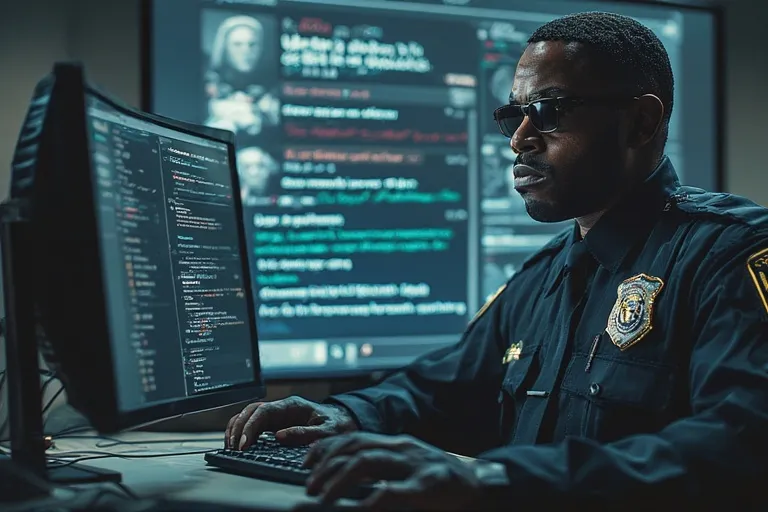

The Chatbot Trail: How AI Helped Catch a Darknet Suspect
A new frontier in law enforcement: using AI to track down suspects.
The Investigation
US authorities have obtained a seizure order against OpenAI, the company behind ChatGPT, to release user data and conversation prompts. This is a first-of-its-kind order, and it was used to identify a suspected administrator of darknet forums that hosted child sexual abuse material (CSAM).
The investigation began in 2019, when Homeland Security Investigations (HSI) agents were searching for the operator of at least 15 darknet forums on Tor. These forums had at least 300,000 users and contained depictions of CSAM. The breakthrough came when an undercover investigator chatted with the suspect in one of the forums, and the suspect mentioned using ChatGPT and shared some of his conversation prompts.
The Conversation that Led to the Suspect
The suspect shared two conversation prompts with the undercover investigator:
- "What would happen if Sherlock Holmes met Q from Star Trek?"
- A request for a long poem in "Trump style" about his love for the song Y.M.C.A. by Village People
These prompts seemed harmless, but they were used by HSI to obtain a seizure order against OpenAI, which was forced to release data on the user's conversations, including names, addresses, and payment information.
The Power of AI
This process is known as a "Reverse AI Prompt Request," and it's similar to how police might request user data from search engines like Google based on specific search terms. However, in this case, the investigators used the chatbot inputs as a digital fingerprint to match the anonymous online identity with the real person.
The Suspect Identified
The data from OpenAI helped the investigators to identify the suspect as 36-year-old Drew H., who had worked at Ramstein Air Force Base and had applied for a job at the Pentagon. The suspect had also revealed in the forum chats that he was undergoing medical examinations and had lived in Germany for seven years.
Charges and Prosecution
The authorities charged Drew H. with conspiracy to promote and distribute abusive material.
The Implications
The case raises concerns about the potential for chatbots to be used for mass surveillance and profiling, and experts are calling for greater transparency and accountability from AI companies.
Expert Insights
- "The use of AI in law enforcement is a game-changer," says Jennifer Lynch, a lawyer with the Electronic Frontier Foundation. "But it also raises serious concerns about privacy and civil liberties."
- "AI companies need to be transparent about how they handle user data and under what circumstances they will hand it over to law enforcement," adds Jens Ferner, a criminal lawyer.
- OpenAI reported that it received 71 requests for disclosure of user information or content last year and provided data for 132 accounts. The company also reported 31,500 instances of CSAM-related content to the National Center for Missing and Exploited Children.
Conclusion
The use of AI in law enforcement is a rapidly evolving field, and this case highlights the potential benefits and risks of using chatbots like ChatGPT to track down suspects. As AI technology continues to advance, it's essential that we have a clear understanding of its implications for our privacy and civil liberties.


Comments
0 commentsLeave a Comment